Tissue-on-demand structures to quantify O₂-mediated regulation
New tools for culture assembly and analysis
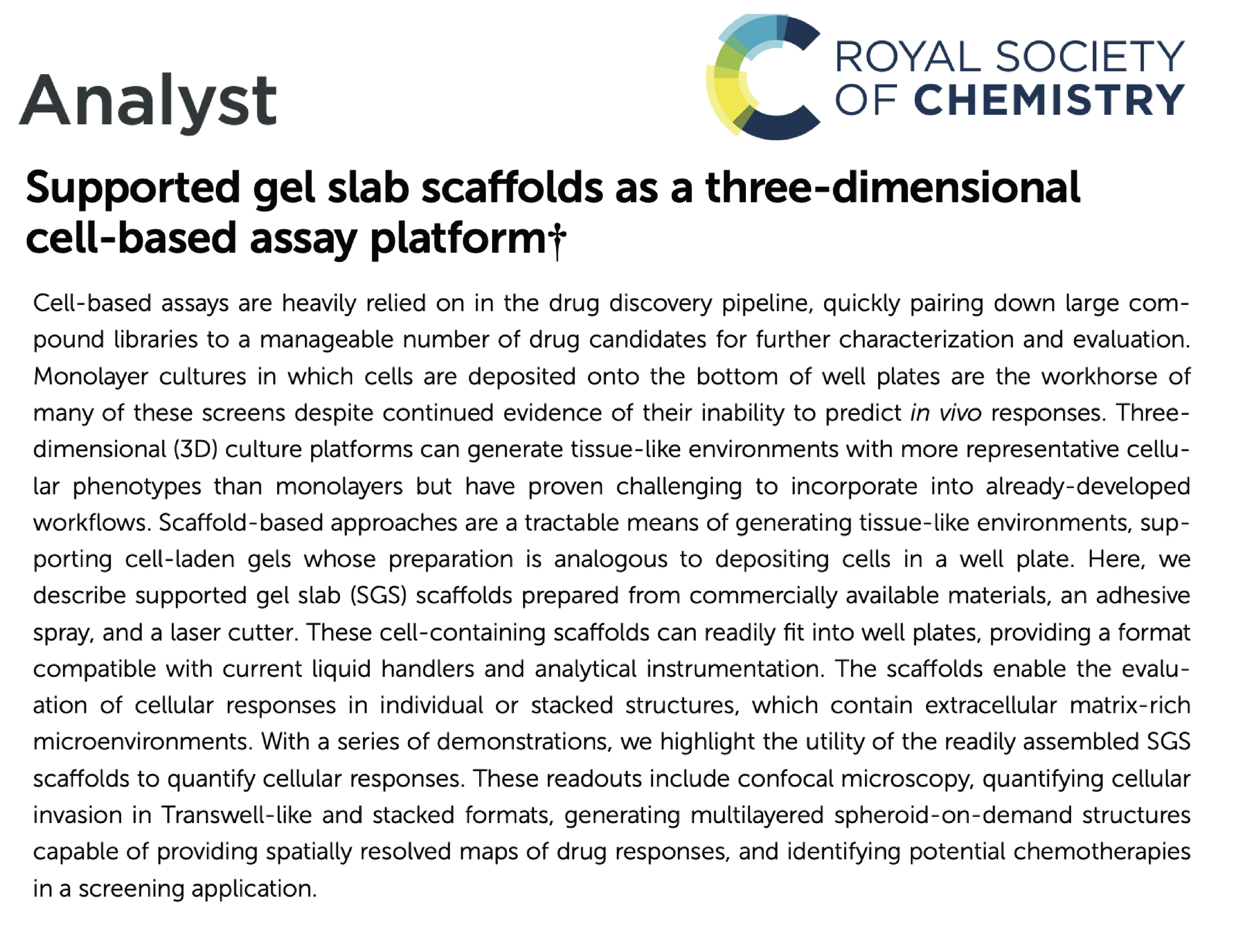
Using scaffolds prepared from wax-patterned paper or composites of porous PET and food-grade silicone, we generate regions that can support a known volume of cell-laden gels. These scaffolds are stackable, capable of forming thick tissue- and tumor-like structures. We use these scaffold structures to study cellular responses at physiologically relevant oxygen tensions and gradients.
Continued advancements in technology include:
A millifluidic flow setup, allowing us to replenish medium and appropriately perfuse healthy tissue models.
Improved optical sensors to quantify both intracellular and extracellular oxygen, pH, lactate, and glucose. These sensors build upon our already published optodes capable of mapping extracelllular oxygen and pH in cell containing scaffolds and stacked cultures.
O2 tension-modulated estrogen signaling
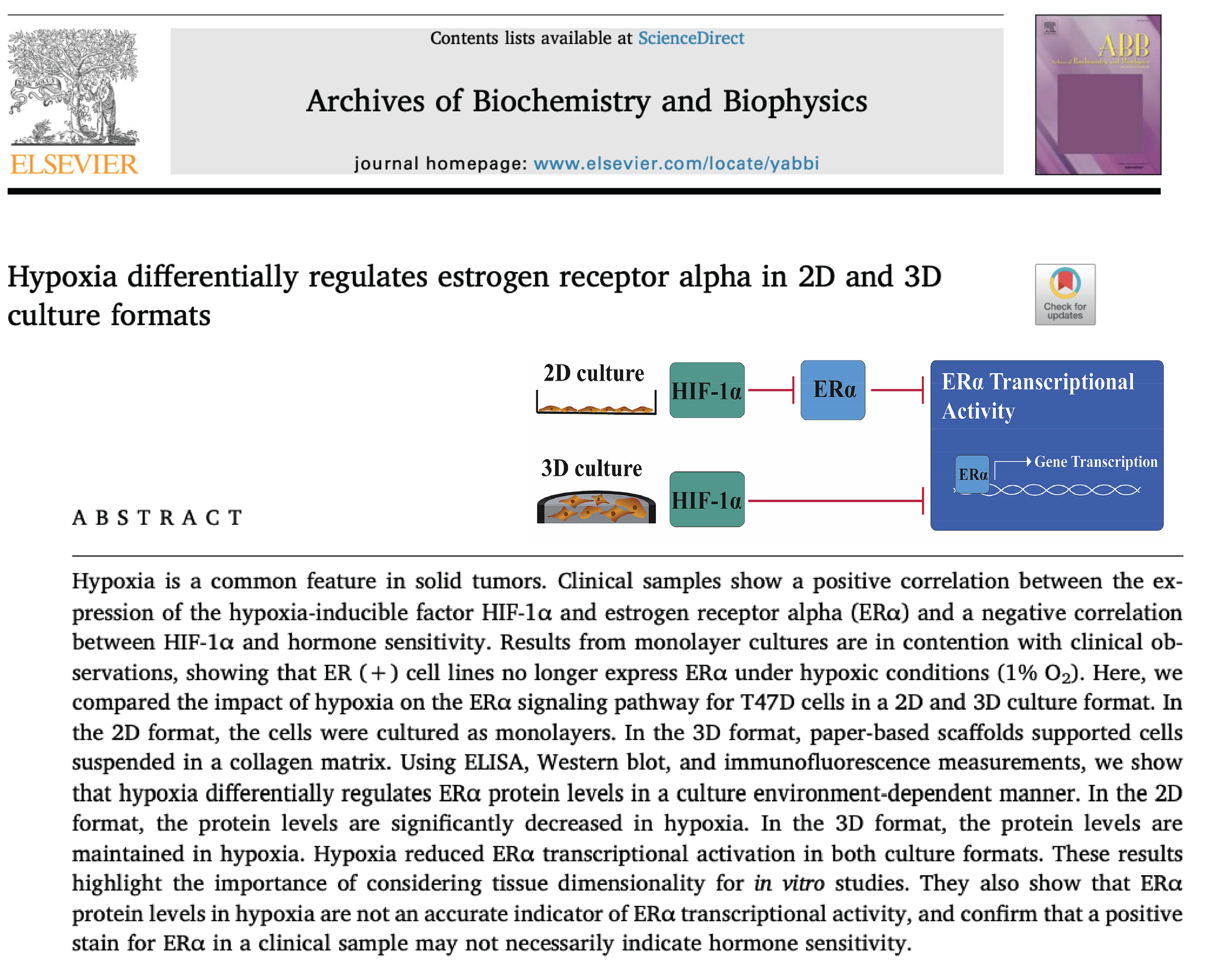
We showed that the expression levels of estrogen receptor alpha are significantly different under normoxic and hypoxic conditions between 2D and 3D culture formats. Much like patient samples, cells maintained in 3D culture formats under hypoxic conditions (common in breast cancer patients) have increased overall expression of the receptor despite decreased activity and decreased sensitivity to hormone therapies. The underlying mechanisms of this increased stability could yield biomarker signatures that better predict whether hormone therapies will be effective. Culture suggests that there are underlying signaling mechanisms that regulate expression.
Our continued work in this area includes:
Mapping post-translational modifications of estrogen receptor alpha (and beta) using IP and LC-MS/MS.
Develop cut-and-run workflows for 3D cultures to evaluate signaling alterations in hypoxia.
O2 gradient reprogramming in tumors
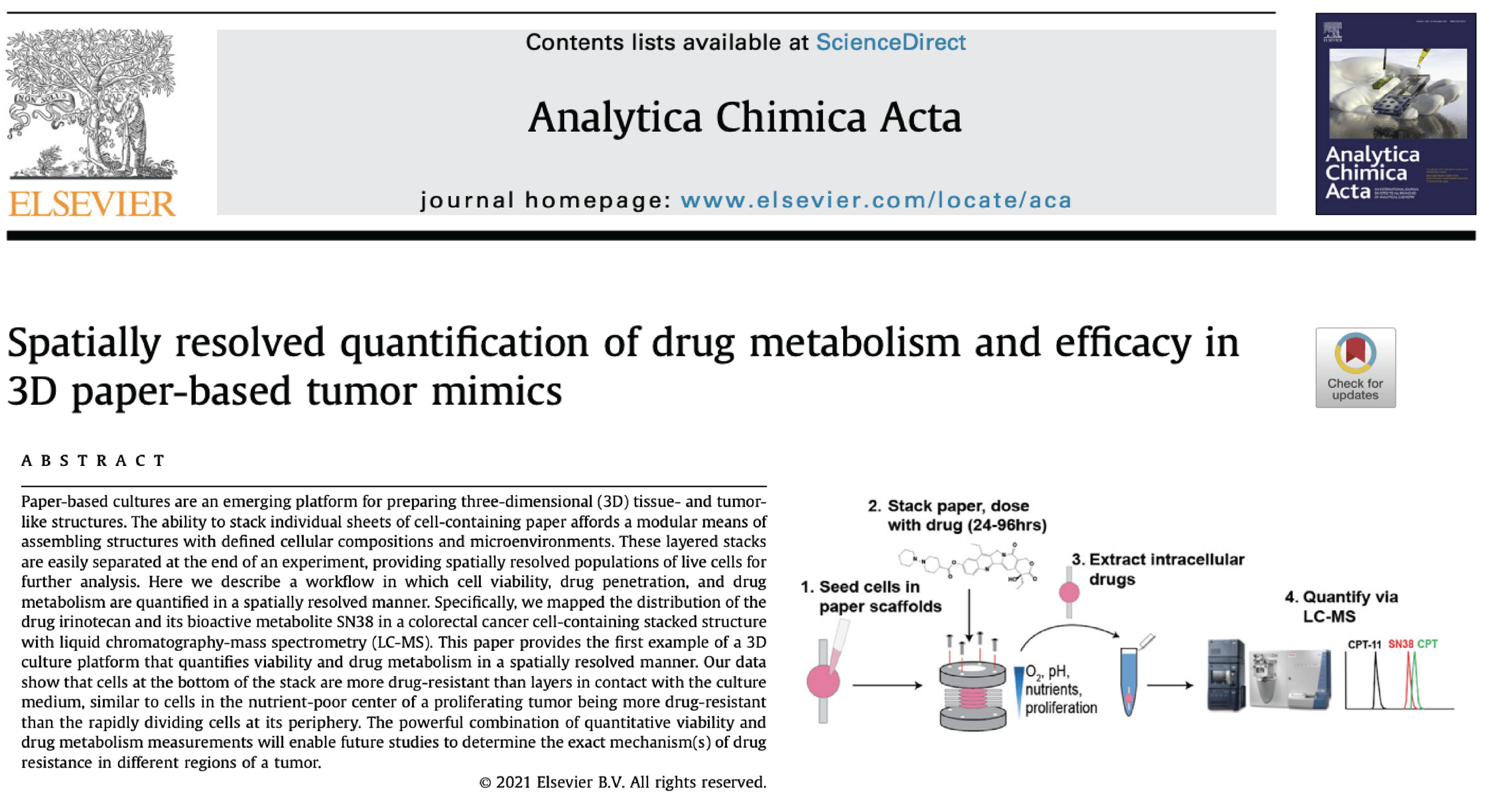
Tumors are diffusion-dominated environments, characterized by regions of hypoxia (pO2 = 0 - 20 mmHg). Using a stacked structure of cell-containing paper scaffolds, we have measured cellular responses to common chemotherapies, including their uptake and metabolism. Hypoxia is known to confer drug resistance in cancer; however, the exact mechanisms (and oxygen and other nutrient-concentration dependence) are not well characterized. We use our culture platform, optical probes, and molecular readouts (targeted and -omics) to better understand the dynamic set of responses occurring in breast and (formerly colorectal) tumors.
Current focuses in this area include:
O2-dependent expression of drug efflux pumps.
Drug partitioning, sequestration, and metabolism in low O2 environments.
The formation and maintenance of lipid droplets in low O2 environments.